
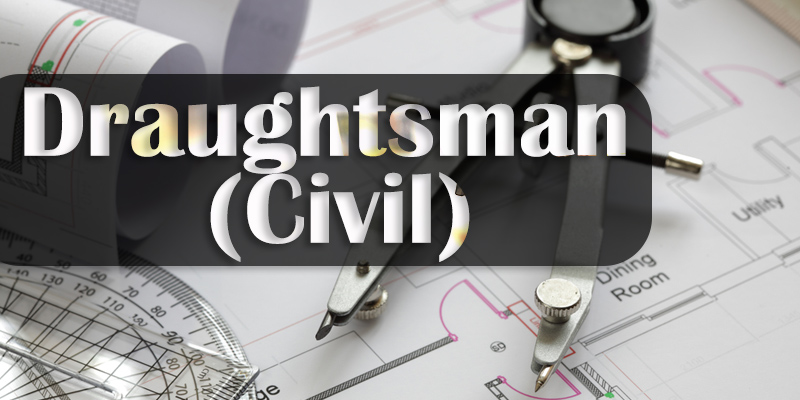

List of Instruments, Equipment and Materials Used During Training
In the ITI Draughtsman Civil trade, practical training plays a vital role in developing technical skills. To perform drawing, surveying, and construction-related tasks effectively, students use a variety of instruments, equipment, and materials. Understanding these tools and their proper usage is essential for accuracy, efficiency, and safety in the workshop.
The tools used in this trade can be broadly classified into three categories: drawing instruments, surveying equipment, and construction materials. Each category has its own importance and application in the training process.
1. Drawing Instruments
Drawing instruments are the most essential tools for a Draughtsman Civil. These are used to prepare accurate and neat technical drawings.
- Drawing Board: A flat surface used to support drawing sheets.
- T-Square: Used for drawing horizontal lines.
- Set Squares: Used for drawing vertical and inclined lines (30°, 45°, 60°).
- Protractor: Used for measuring and drawing angles.
- Scale: Used to measure distances and prepare drawings to scale.
- Compass: Used for drawing circles and arcs.
- Divider: Used for transferring measurements.
- Pencils: Different grades (H, HB, 2H) for various line types.
- Eraser and Sharpener: Used for corrections and maintaining pencil sharpness.
Proper handling and maintenance of drawing instruments ensure accuracy and long life of the tools.
2. Surveying Instruments
Surveying instruments are used to measure distances, angles, and elevations in the field. These tools help in preparing site plans and layouts.
- Chain and Tape: Used for measuring distances.
- Prismatic Compass: Used for measuring bearings.
- Leveling Instrument: Used for determining height differences.
- Theodolite: Used for measuring horizontal and vertical angles.
- Ranging Rod: Used for marking survey lines.
- Plumb Bob: Used for vertical alignment.
Students are trained to use these instruments carefully and accurately to collect field data.
3. Computer and Software
Modern drafting work is largely done using computers. Students are trained in computer-aided design (CAD) to prepare digital drawings.
- Computer Systems: Used for drafting and design work.
- CAD Software: Such as AutoCAD for creating 2D and 3D drawings.
- Printer/Plotter: Used for printing drawings.
Knowledge of CAD tools is essential for working in modern engineering and construction industries.
4. Workshop Equipment
In addition to drawing and surveying tools, students use various equipment in the workshop for practical training.
- Work Tables: For drawing and practical work.
- Storage Cabinets: For keeping tools and materials.
- Measuring Instruments: Such as steel rules and measuring tapes.
- Cutting Tools: For preparing models or materials.
Proper use of workshop equipment ensures smooth and safe working conditions.
5. Construction Materials
Knowledge of construction materials is important for preparing realistic drawings and understanding building processes.
- Cement: Used as a binding material in construction.
- Sand: Used in mortar and concrete.
- Bricks: Used for building walls.
- Steel: Used for reinforcement in structures.
- Timber: Used for doors, windows, and formwork.
Students learn the properties and uses of these materials during training.
6. Drawing Materials
Apart from instruments, various materials are used in drawing work:
- Drawing Sheets: Used for preparing drawings.
- Tracing Paper: Used for copying drawings.
- Masking Tape or Clips: Used to fix sheets on the board.
- Ink Pens: Used for final drawings.
Proper selection of materials helps in producing clean and professional drawings.
7. Safety Equipment
Safety equipment is essential to protect students during practical work:
- Safety helmets
- Gloves
- Safety shoes
- Goggles
Students must use safety equipment whenever required to prevent injuries.
Care and Maintenance of Tools
Proper care and maintenance of tools and equipment are necessary to ensure their accuracy and durability:
- Clean tools after use
- Store them in proper places
- Avoid rough handling
- Report damaged tools immediately
Maintaining tools in good condition improves work quality and safety.
Conclusion
The ITI Draughtsman Civil trade requires the use of various instruments, equipment, and materials for effective training. From drawing tools to surveying instruments and construction materials, each item plays a significant role in skill development.
By learning the correct use and maintenance of these tools, students can improve their accuracy, efficiency, and professionalism. This knowledge prepares them for real-world work environments and helps them build a successful career in the civil engineering field.